Japchae (Korean Glass Noodle Stir-Fry)

Picture of allen.yi
allen.yi
Share :
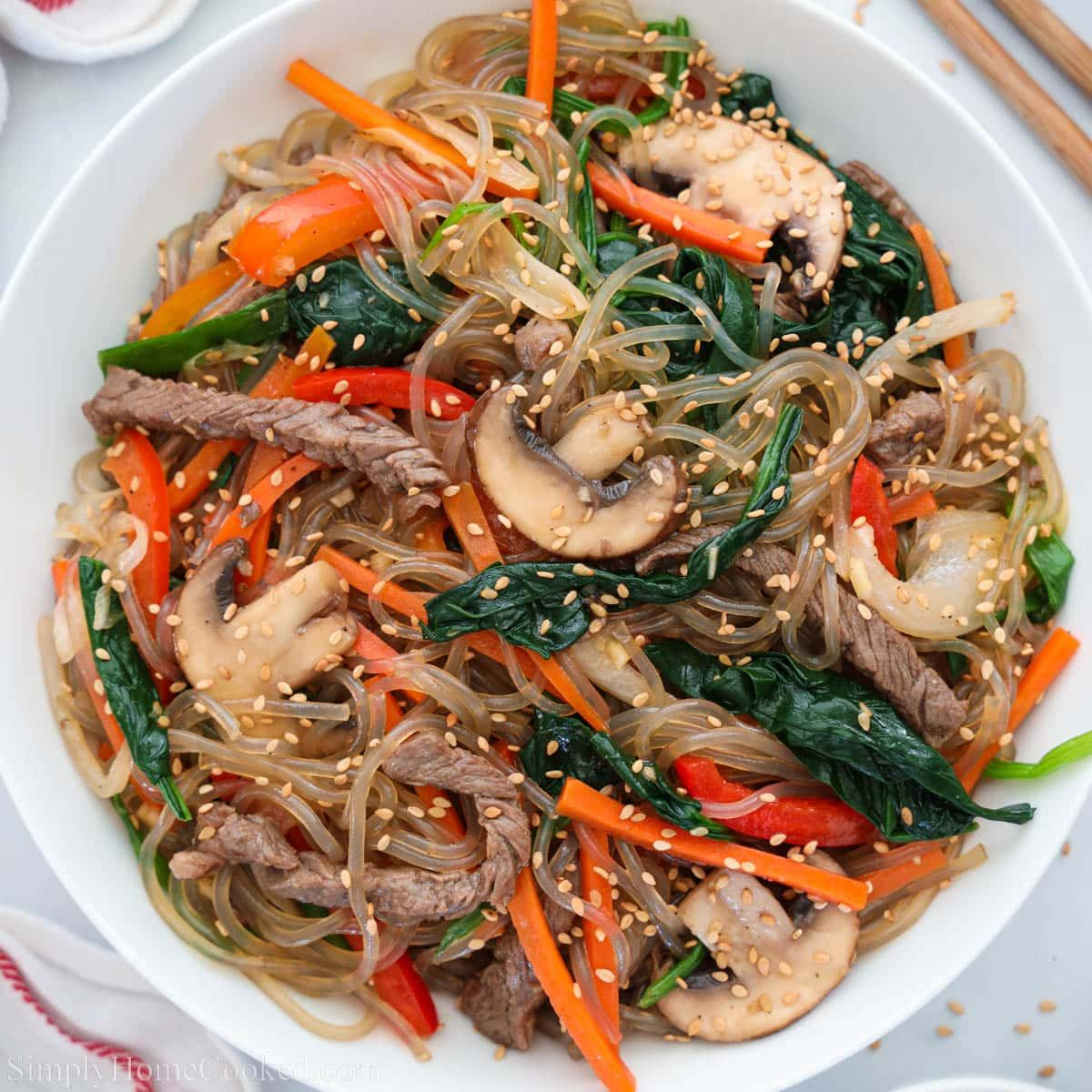
Korean Japchae glass noodles stir-fried with beef, spinach, carrots, bell peppers, and shiitake mushrooms topped with sesame seeds in a white bowl.

Introduction

Japchae (잡채) is one of the most beloved Korean dishes, known for its glossy glass noodles, colorful vegetables, tender beef, and a perfect balance of savory and slightly sweet flavors. It’s a festive food, often seen on holiday tables, weddings, birthdays, and major celebrations in Korea.

Unlike some dishes that are best eaten hot, Japchae is uniquely versatile: delicious warm, at room temperature, or even chilled from the fridge. That makes it a favorite for potlucks, family gatherings, and meal prepping.


Cultural & Historical Background

The origins of Japchae go back to the 17th century Joseon Dynasty. Historical records state that during King Gwanghaegun’s reign, a court official named Yi Chung presented a dish made only from vegetables at a royal banquet. The king loved it so much that Yi was rewarded with a promotion.

At that time, Japchae did not contain noodles or beef—it was purely a vegetable stir-fry. Sweet potato glass noodles (dangmyeon) were introduced much later, around the 20th century, making Japchae the dish we know today.

What makes Japchae remarkable is its adaptability. It can be served as a main dish, a side dish (banchan), or even as Japchae-bap (Japchae over rice). It’s also one of the rare Korean dishes equally enjoyable across temperatures.


Anecdote / Public Figure Story

One of my fondest memories of Japchae is from Korean family holiday gatherings. My friend’s mother, in her 60s, always insisted on making Japchae herself—even though it requires meticulous preparation. She used to say, “The guests forget how tired you are when they taste the harmony of flavors.”

She focused especially on balance: not too oily, just the right sweetness, and that unmistakable nutty aroma of sesame oil at the finish.

Even modern chefs like Kim Chan-Joong, known for reinterpreting Korean classics, have elevated Japchae into fine dining, presenting it as a vibrant, artful dish while preserving its traditional heart.


Ingredients with Measurements (4 servings)

IngredientAmountNotes
Sweet potato glass noodles (dangmyeon)250 g (8–9 oz)Available online & Asian grocery stores
Beef (sirloin or tenderloin, thinly sliced)100 g (3.5 oz)Season with soy sauce, garlic, sugar
Spinach110 g (4 oz)Blanch, squeeze out excess water
Carrot1 medium (120 g)Julienne
Red & yellow bell peppers½ eachJulienne
Onion½ medium (100 g)Thinly sliced
Shiitake mushrooms (fresh or rehydrated dried)100 gSliced
Egg1Make thin omelet strips (optional garnish)
Scallions2–3 stalksSlice diagonally
Garlic2 clovesMinced
Soy sauce2–3 tbsp (30–45 ml)Adjust to taste
Sugar (or honey, oligo syrup)1–2 tbspAdjust sweetness
Sesame oil2 tbspFor aroma
Neutral oil (canola, grapeseed)Small amountFor stir-frying
Sesame seeds1 tbspToasted
Salt & black pepperTo tasteFor seasoning

Step-by-Step Preparation

  1. Prep the vegetables & beef
    • Julienne carrots, peppers, onion. Slice mushrooms.
    • Blanch spinach, rinse under cold water, squeeze, and cut into 2-inch lengths.
    • Season beef with soy sauce, garlic, sugar, and pepper. Rest 10 minutes.
    • Make a thin omelet with egg, cut into strips.
  2. Cook the noodles
    • Boil noodles for 6–8 minutes until soft but chewy.
    • Rinse in cold water, drain, and toss with a drizzle of sesame oil to prevent sticking.
  3. Stir-fry vegetables & beef
    • In a pan, stir-fry onion, carrots, peppers, and mushrooms separately with a pinch of salt.
    • Stir-fry beef until cooked through.
    • Spinach can be lightly sautéed or used as blanched.
  4. Make the sauce
    • Mix soy sauce, sugar, minced garlic, and a little water or stock.
  5. Combine everything
    • In a wok or large skillet, add noodles, vegetables, beef, and sauce.
    • Stir-fry together on medium-high heat for 2–3 minutes.
    • Finish with sesame oil and toasted sesame seeds.
  6. Garnish
    • Add egg strips on top before serving.

Tools & Equipment

  • Large wok or skillet
  • Big pot for boiling noodles
  • Sharp knife & cutting board
  • Mixing bowls
  • Small pan for egg garnish
  • Chopsticks or tongs (to toss noodles evenly)

Health Benefits (Especially for Ages 50+)

Japchae is more than just festive—it’s a nutrient-rich, balanced dish:

  • Fiber from spinach, carrots, peppers → Supports digestion and prevents constipation.
  • Antioxidants like beta-carotene, vitamin C, and flavonoids → Protect cells and slow aging.
  • Protein from beef, egg, and mushrooms → Essential for muscle retention as we age.
  • Healthy fats from sesame oil → Rich in unsaturated fatty acids, good for cardiovascular health.
  • Gluten-free option → Sweet potato noodles are naturally gluten-free, suitable for sensitive diets.
  • Calorie control → Adjust sugar, beef, and oil for a lighter version without losing flavor.
  • Meal prep friendly → Can be stored and enjoyed cold, reducing daily cooking stress.

Ingredient Guide & Where to Buy (U.S. Online)

IngredientWhere to Buy
Sweet potato glass noodles (dangmyeon)Assi Glass Noodles – Amazon
Ottogi Glass Noodles – Amazon
Haepyo Dangmyeon – Amazon
O’Food Glass Noodles – Kroger
Soy sauce (Korean style)Kikkoman Soy Sauce – Walmart
Sesame oilKadoya Pure Sesame Oil – Amazon
Shiitake mushrooms (dried)Roland Dried Shiitake – Amazon
Sesame seeds (toasted)Eden Organic Sesame Seeds – Amazon

Other ingredients like beef, carrots, onions, spinach, and peppers are easily found at H-Mart, Walmart, Whole Foods, or local grocery stores.


Healthy Variations

  • Vegetarian / Vegan Japchae → Replace beef with tofu, tempeh, or more mushrooms.
  • Low-sodium Japchae → Use reduced-sodium soy sauce.
  • Low-sugar Japchae → Replace sugar with honey, monk fruit, or stevia.
  • High-protein Japchae → Add edamame, tofu, or more egg strips.
  • Oil-light Japchae → Use minimal oil for stir-frying, relying more on blanched vegetables.

Cooking Tips & Regional Variations

  • Vegetables → You can add zucchini, bean sprouts, bok choy, or even seasonal greens.
  • Mushrooms → Shiitake adds depth, but oyster, enoki, or wood ear mushrooms also work.
  • Seasoning balance → Always taste as you go. Soy sauce brands vary in saltiness.
  • Heat control → Toss quickly on high heat to avoid soggy noodles.
  • Regional styles → Southern Korea tends to use more vegetables and vibrant colors; Seoul versions balance flavors; Northern-style Japchae can be more savory and less sweet.

Serving & Pairing Suggestions

  • Japchae-bap: Serve over rice for a filling main dish.
  • Banchan style: Serve as a side alongside kimchi, pickled radish, and other small plates.
  • Party food: Great cold, making it a favorite for potlucks and picnics.
  • Pairings: Pairs well with Korean rice wine (makgeolli), green tea, or even light white wine.

Quick & Convenient Version

For busy days, here’s a shortcut Japchae:

  1. Use frozen mixed vegetables instead of cutting fresh ones.
  2. Buy pre-marinated beef or use rotisserie chicken.
  3. Microwaveable glass noodles or pre-cooked ones save time.
  4. Prepare a large batch of sauce (soy sauce + garlic + sweetener + sesame oil) and refrigerate.
  5. Stir-fry everything in one large pan for fewer dishes.
Mst Samsunnahar

Lorem ipsum dolor sit amet, consectetuer adipiscing elit, sed diam nonummy nibh euismod tincidunt ut laoreet dolore magna aliquam erat volutpat.

Related Post

Scroll to Top